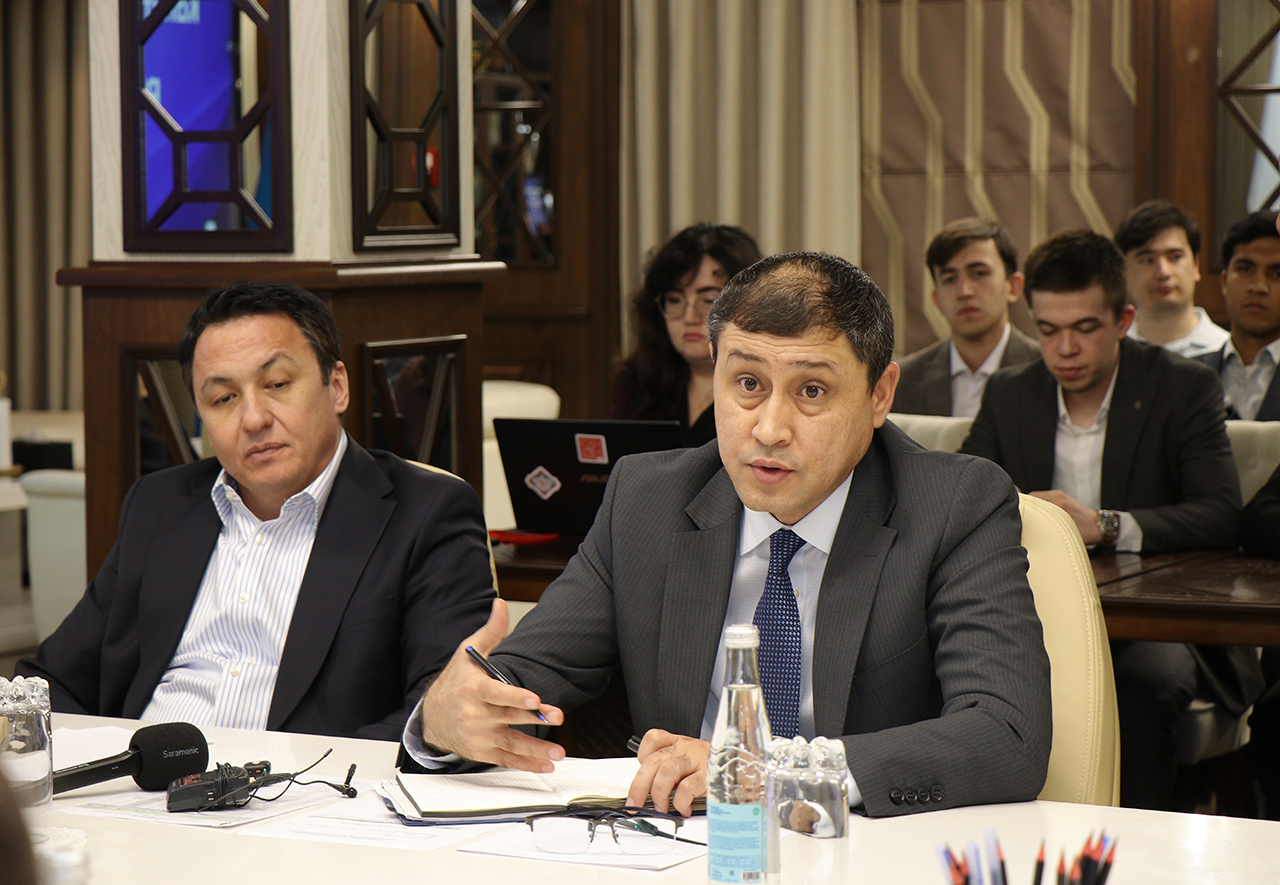
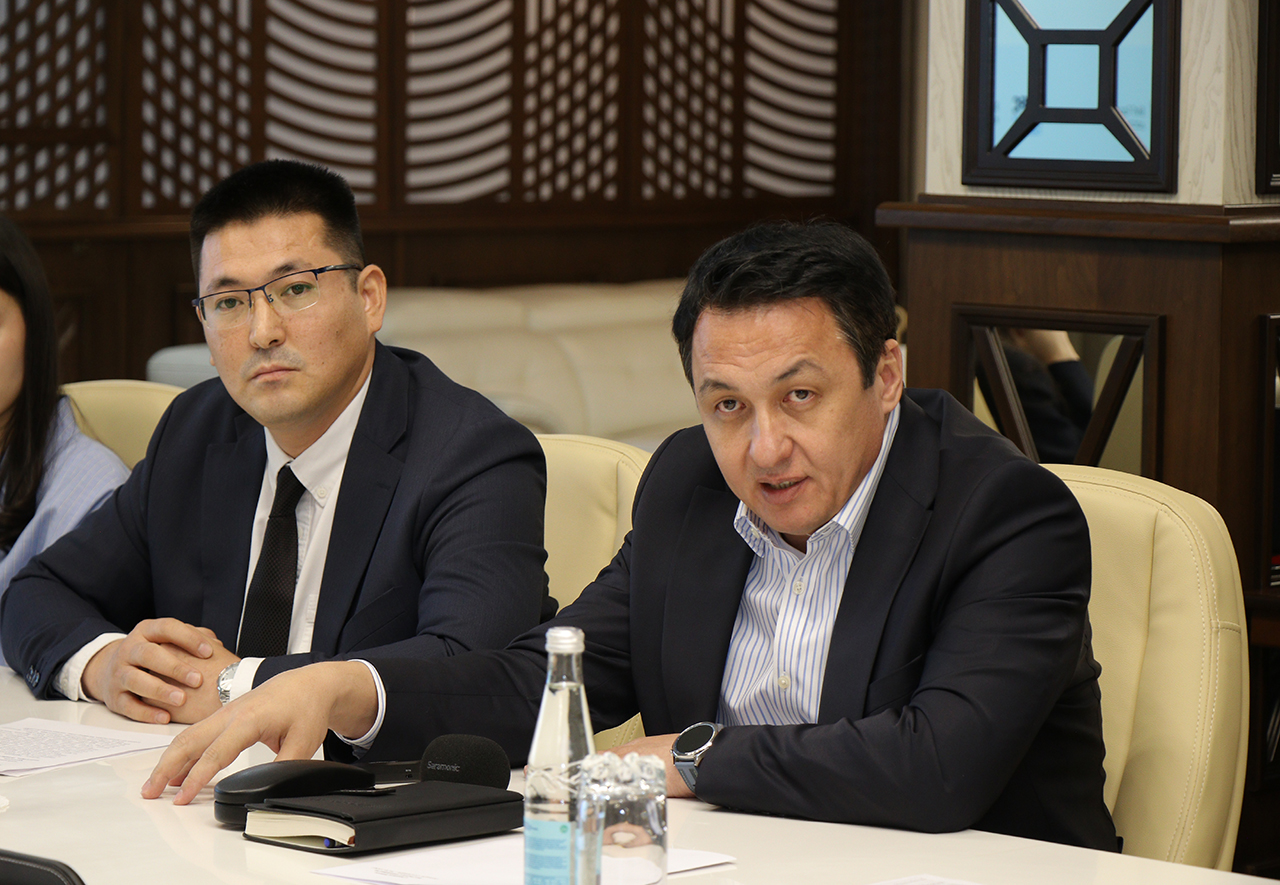
A press conference dedicated to the Draft Law 'On the Capital Market' was organized at the National Agency of Perspective Projects of the Republic of Uzbekistan in collaboration with higher education institutions (the draft law was passed in the first reading in the Legislative Chamber of the Oliy Majlis and is being prepared for consideration in the second reading).
During the event, S. Toreshov, Head of the Capital Market Regulation Department, provided information on the main provisions of the draft law and the important changes aimed at further developing the capital market, creating new opportunities for investors, and aligning market operations with international standards.
As noted, consistent reforms have been implemented in our country in recent years to develop the capital market and improve the investment climate. As a result, steady growth has been observed in the key indicators of the capital market.
In particular, the volume of share issuances reached 265.1 trillion UZS in 2025, up from 189.7 trillion UZS in 2023, and amounted to 269.4 trillion UZS as of July 1, 2026. The issuance of corporate bonds grew from 1.06 trillion UZS in 2023 to 3.93 trillion UZS in 2025, and exceeded 7 trillion UZS as of July 1, 2026. Meanwhile, the total trading volume on the stock exchange increased from 2.9 trillion UZS in 2023 to 17.6 trillion UZS by the end of 2025, representing a nearly sixfold increase.
'Naturally, rather than stopping at the achieved results, the need arose to create a solid legislative foundation for the further systematic development of the capital market. It is precisely for this purpose that the Draft Law "On the Capital Market" was developed,' said S. Toreshov.

The new draft law consists of 16 chapters and 123 articles and was developed on the basis of a fundamental revision of the norms of the 2015 Law 'On the Securities Market' in terms of their compliance with modern market requirements. The draft was prepared in collaboration with the European Bank for Reconstruction and Development, the International Finance Corporation, the Asian Development Bank, the Islamic Development Bank, the UN Development Programme, the International Organization of Securities Commissions (IOSCO), the US Department of Commerce, and the Securities and Exchange Commission.
One of the important innovations of the draft law is the expansion of the types of capital market financial instruments. In particular, it provides for the legal regulation of the issuance of derivative financial instruments—options, swaps, futures, forwards, and contracts for difference—as well as covered bonds, securitized bonds, sustainability bonds, and sukuk securities in accordance with the principles of Islamic finance.
'Each of these instruments creates additional opportunities for investors in terms of risk management and portfolio diversification,' the head of the department emphasized.
By introducing modern financial instruments, it is planned to attract 10 trillion UZS in investments to the stock market by 2030. At the same time, the draft law also provides for tax incentives aimed at encouraging the attraction of long-term institutional and private investors to the capital market. Specifically, it envisions exempting the income of certain investment funds and specific operations related to covered and securitized bonds from taxation, as well as granting tax incentives for certain income derived from corporate bonds and sukuk securities until 2038.

At the press conference, special attention was paid to the issue of introducing sukuk securities in accordance with the principles of Islamic finance. The draft law provides for the regulation of the legal characteristics of sukuk, the mechanisms for their issuance and circulation, as well as the main types of partnership, lease, trade, and agency sukuks. In order to protect the rights and interests of investors, the introduction of an institution of a representative for sukuk holders and a mechanism for confirming the compliance of the sukuk with Islamic finance standards is established.
Another important direction of the draft law is the development of the capital market infrastructure and the harmonization of the activities of professional participants with international standards. Specifically, it provides for the licensing of custodial activities, the permit-based regulation of rating agencies, management companies, and funds engaged in investment activities, the introduction of a central counterparty institution, the establishment of self-regulatory organizations and the institution of a 'representative of bondholders,' as well as the categorization of investors, including 'qualified investors.' The expansion of the powers of the Central Securities Depository is also planned.
'Ultimately, all of the aforementioned innovations are aimed at adapting our country's capital market infrastructure to international standards and enhancing the transparency and reliability of the market for foreign investors,' said S. Toreshov.
Furthermore, the draft law places special emphasis on aligning the state regulation and supervision system of the capital market with IOSCO international standards. It envisions expanding the supervisory powers of the authorized body, applying financial sanctions independently, and creating the ability to obtain information constituting bank secrecy in cases stipulated by law. These measures are aimed at preventing violations and improving the efficiency of timely responses to them.
The opportunity for international financial institutions to issue bonds within the territory of Uzbekistan, as well as the creation of conditions for local companies to access foreign capital markets, are being consolidated at the legislative level.
The adoption of this law will be a significant step toward attracting additional investments into our country's economy, as well as creating new financial opportunities for the public and businesses.